


Watch the full conversation
Khabib Nurmagomedov on the Lex Fridman Podcast
https://www.youtube.com/watch?v=l6USUAIKJlsAs we work towards our upcoming update, there has been a considerable amount happening behind the scenes at London Psychometric Laboratory. Research, preparation, development, testing and refinement all take time. Not everything works perfectly the first time, and progress often means continuing through the difficult parts rather than avoiding them.
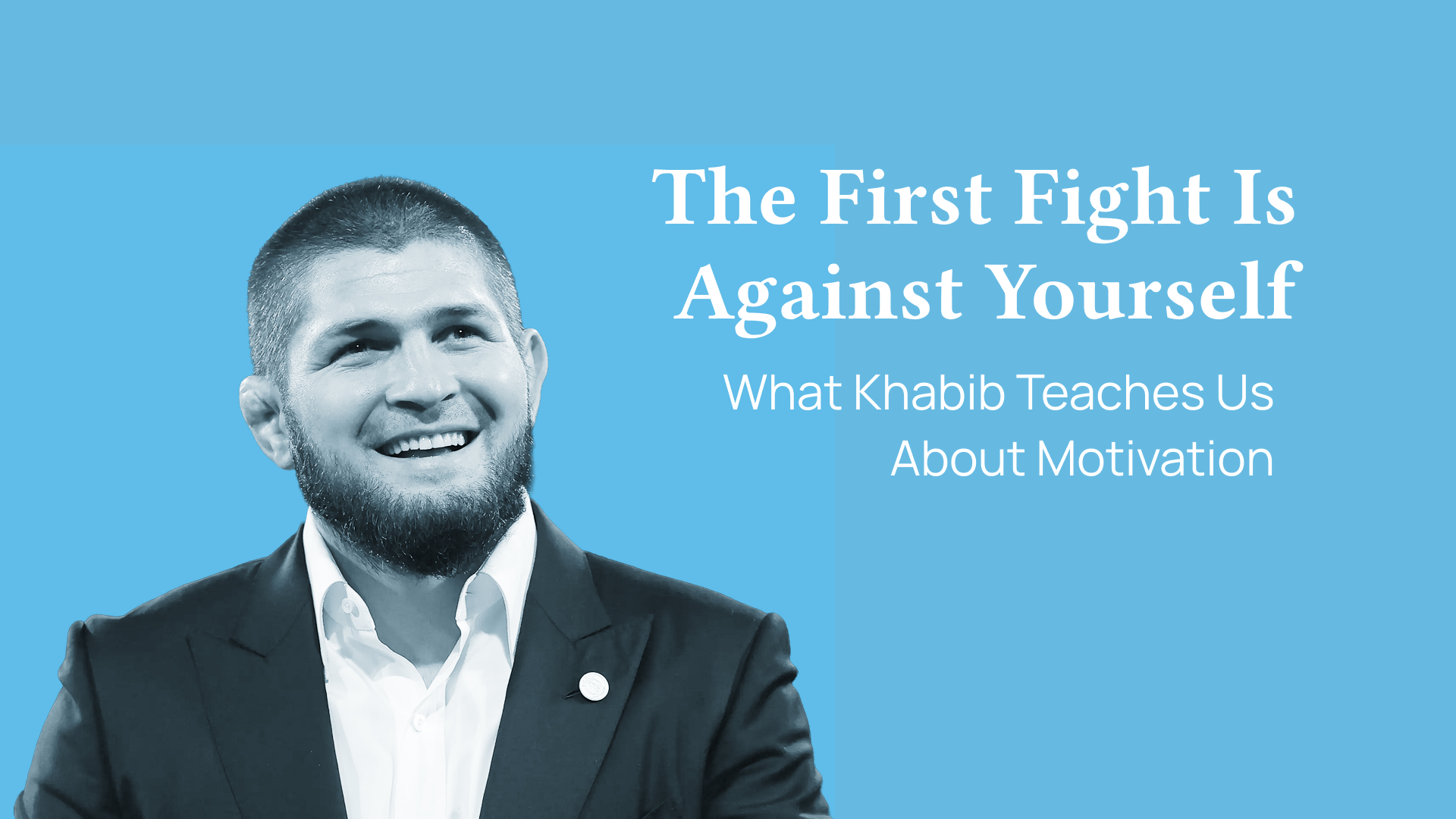
That reminded me of a recent conversation between Lex Fridman and Khabib Nurmagomedov.
The conversation is fascinating well beyond MMA. Khabib talks about growing up in Dagestan, the culture of training, the people who influenced him, competition, fear, failure and what it takes to become exceptional. Much of what he describes comes back to a simple idea: you have to become comfortable with difficulty.
The price of becoming capable
Success is often presented as though it is the result of talent, opportunity or motivation.
Those things matter, but there is another part of the equation that is much less visible.
What are you willing to experience on the way there?
The difficult training session. The failed attempt. The uncomfortable conversation. The project that does not work as expected. The period when progress seems painfully slow.
These experiences are not necessarily obstacles to becoming stronger. They can be part of the process through which strength is developed.
Khabib describes a system in which many people begin training, but relatively few continue for years. The people who remain have to repeatedly deal with discomfort, pressure and failure. Over time, something changes.
The challenge is no longer simply external. It becomes psychological.
Can you keep going? Can you manage fear? Can you remain focused when the pressure increases? Can you recover when something goes wrong? And can you understand what is happening inside you well enough to do something about it?
The opponent is not always outside you
One of the most interesting themes in the conversation is the psychological battle that takes place before the physical one.
Khabib talks about the nerves and fear that come before competition, including the possibility of failing to perform despite all the preparation. The opponent is only one part of the problem. The other is what happens inside your own mind.
The first competition is against yourself.
That applies to almost everything we try to achieve.
We can spend enormous amounts of time analysing the external problem while overlooking the person who has to solve it.
What motivates you? What happens when you are under pressure? How do you respond to setbacks? Where do you become impatient? What gives you confidence? What makes you doubt yourself?
And perhaps most importantly, do you actually know yourself well enough to answer those questions?
Resilience starts with self-understanding
Psychological resilience is not simply about telling yourself to be tougher.
It begins with understanding the psychological resources you already have and recognising the areas that may need development.
This is one reason we believe psychological assessment can be so valuable.
The TEIQue looks at individual differences in trait emotional intelligence across 15 facets and four factors, including Well-Being, Self-Control, Emotionality and Sociability. These include characteristics such as Self-Esteem, Optimism, Emotion Regulation, Stress Management, Impulse Control, Empathy, Assertiveness and Self-Motivation.
The purpose is not to put someone into a category of “strong” or “weak”.
It is to help create a more detailed picture of how a person typically experiences and manages their emotional world.
Sometimes that understanding confirms strengths you already recognise.
Sometimes it reveals something you have been avoiding.
And sometimes it shows you that the way you have been approaching a problem may not be helping you.
That is where development becomes possible.
You can accept where you are and learn how to work with it.
Or you can decide that you do not like where you are and begin changing it.
There is always another fight
Perhaps the most interesting part of Khabib’s philosophy is that success itself does not seem to be the final destination.
You achieve something. You feel the satisfaction of winning. Then the feeling passes. There is another challenge, another goal, another reason to get up and continue.
That is probably true of most meaningful achievements in life.
The promotion eventually becomes normal. The business eventually becomes the next problem to solve. The completed project is followed by another project. The personal goal you spent years pursuing eventually becomes part of your history.
Life keeps moving.
Perhaps that is why resilience matters so much.
The goal is not to reach a point where life stops being difficult. The goal is to become someone who can meet difficulty, learn from it and continue moving forward.
And the first step may be much simpler than we think.
Understand who you are.
Understand what motivates you. Understand how you respond when things become difficult. Then decide what you want to keep, what you want to develop and what you want to change.
Because the battle is often within you.
And so, too, are many of the resources you need to win it.